
Lobsters Along the Norwegian Coast
A lobster’s long antennae, segmented body, and large claws make a striking coastal motif. In Norwegian waters, the European lobster is an important example of this familiar animal, living in places where the seabed offers shelter.
Life among rocks and crevices
Along Norway’s coast, European lobsters occur from the Swedish border to Trøndelag, with occasional records in Nordland. They are commonly found at depths of about five to forty meters. Rocky ground, cracks, and spaces beneath large stones provide hiding places.
The animal generally remains sheltered during the day and becomes more active in search of food at night. Its diet includes other crustaceans, snails, marine worms, and shellfish. A rocky habitat therefore provides both cover and access to a varied food supply.
Looking beyond a single color
Live European lobsters can appear dark or blue, with considerable variation. Color alone is not a reliable way to identify a species or establish that an animal is an exceptionally rare form.
For a decorative image, color can also be an artistic choice. Shape and texture may communicate the subject while a blue palette gives the scene its particular mood.
A lobster on a circular surface
Our blue-lobster clock explores that combination of recognizable anatomy and expressive color. Notice how the claws create width while the antennae extend the figure’s reach. The surrounding space allows those smaller lines to remain visible, giving a compact image the feeling of a much larger animal.
Explore related clocks
-
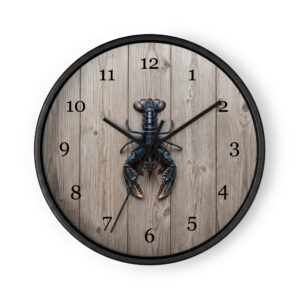
Norwegian Blue Lobster
$54.99 Select options This product has multiple variants. The options may be chosen on the product page