
Norwegian Coffee Culture
A cup of coffee can make an ordinary room feel ready for a visitor. In Norwegian-inspired imagery, a pot, a cup, and a quiet corner suggest a pause in the day. The history behind that familiar scene connects imported goods, household routines, and places where people met.
From imported goods to the kitchen
Coffee was among the important imported products sold by Norway’s kolonial grocery stores. Norsk Folkemuseum traces the emergence of these shops to around 1860. Its preserved Sanden grocery interior offers a later glimpse of the setting in which customers bought everyday supplies.
The museum’s presentation of a home in 1905 provides a smaller detail of domestic life: a separate kerosene burner allowed the household to boil coffee without heating the whole wood stove. Such an arrangement was especially convenient in summer. A familiar drink could help shape the way a kitchen was used.
Coffee as part of a shared table
The social setting was not always a private home. In Oslo, the unemployed workers’ café established in 1929 offered food and coffee through a collectively supported initiative. It moved into Rødfyllgata 12 in 1932. This is one concrete example of coffee accompanying hospitality beyond the family kitchen.
A quiet subject for a clock
Our coffee-themed clocks explore still-life scenes rather than one prescribed way of drinking coffee. A cup provides a small focal point; nearby objects suggest the person who might have set it down. Notice how the arrangement turns a daily habit into an image of warmth, attention, and time for a pause.
Explore related clocks
-
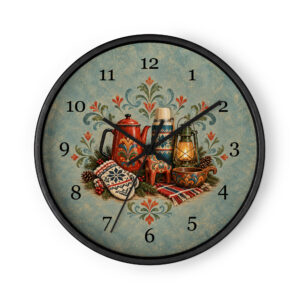
Norwegian Folk Art – Cozy Winter Coffee Still Life
$54.99 Select options This product has multiple variants. The options may be chosen on the product page -
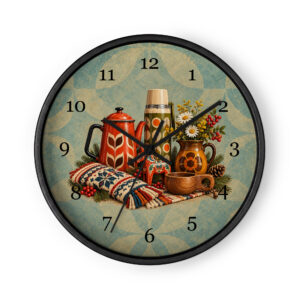
Norwegian Retro Coffee – Nordic Knitting Still Life
$54.99 Select options This product has multiple variants. The options may be chosen on the product page