
Norwegian Knitting Traditions
Norwegian knitting traditions include much more than one patterned sweater. Stockings, mittens, cardigans, and changing fashions all belong to the story. Looking at the garments and tools together reveals a craft practiced in everyday life as well as admired for its patterns.
Garments that help date the story
Among Norsk Folkemuseum’s knitted pieces from the eighteenth century, mittens and stockings form the largest group. Knitting became more common from the middle of the nineteenth century, when early multicolored cardigans appeared in places including Setesdal and Fana.
That sequence matters. The familiar association between Norwegian knitting and a patterned cardigan does not mean every surviving knitting tradition began with that particular garment. An older stocking and a later sweater answer different needs and belong to different settings.
A craft with many communities
Textile work also formed part of life in coastal Sámi communities. Norsk Folkemuseum describes carding, spinning, weaving, sewing, and knitting among the activities of women in Porsanger. This broadens the picture beyond a single regional costume or decorative style.
Patterns continued to change through the twentieth century and into the present. A tradition can remain recognizable while people adopt new garments, colors, and ways of working.
Knitting as a still-life subject
Yarn and needles can suggest an activity temporarily set aside. Beside a coffee cup, they turn a collection of objects into a scene with an implied person and a moment of rest. Our knitting-themed clock explores that everyday setting. Its connection is the craft itself; the illustration is not assigned to a particular historical stitch pattern without supporting evidence.
Explore related clocks
-
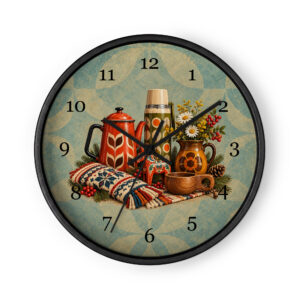
Norwegian Retro Coffee – Nordic Knitting Still Life
$54.99 Select options This product has multiple variants. The options may be chosen on the product page