
The Nautical Compass and Compass Rose
A compass helps turn a direction into something that can be read. Its rose arranges the points of the horizon around a circle, creating a design that is both practical and visually memorable. That circular structure also makes it a natural subject for a clock.
Magnetic north and true north
A magnetic compass responds to Earth’s magnetic field. Its reference is not exactly the same as geographic north, so navigators account for magnetic variation. Magnetic influences aboard a ship can introduce a further error known as deviation.
A gyrocompass works differently: it provides a reference to geographic north and requires power. The familiar magnetic compass does not need an electrical supply to align its needle. These differences explain why the word “compass” covers more than one kind of instrument.
Reading the compass rose
A rose may show a full circle of 360 degrees, the cardinal directions, or a traditional arrangement of 32 points. Longer and shorter points create a hierarchy, helping the eye distinguish the main directions from smaller divisions.
The decorative image of a compass rose should be distinguished from a functioning navigation instrument. A printed pattern can evoke travel without measuring any direction.
Direction as a design theme
On our compass-themed clocks, the interest lies in radial balance: points extend from a shared center while lettering and borders organize the edge. Compare the two designs to see how a change in color or emphasis can make the same maritime theme feel quite different.
Explore related clocks
-
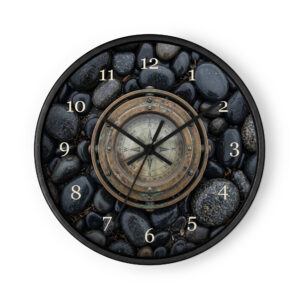
Norwegian Nautical Compass
$54.99 Select options This product has multiple variants. The options may be chosen on the product page -
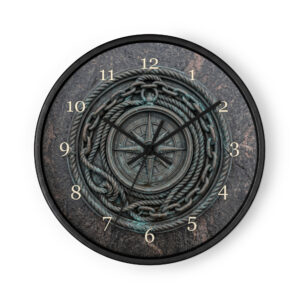
Norwegian Nautical Compass Rose
$54.99 Select options This product has multiple variants. The options may be chosen on the product page